Photo by Clars Puk on Unsplash
Hong Kong is best known for its skyline, neon signs, packed streets, and towering skyscrapers rising above one of the world’s most picturesque harbours.
Tropical beaches aren’t usually part of the picture.
That’s exactly why this corner of Hong Kong feels so surprising.
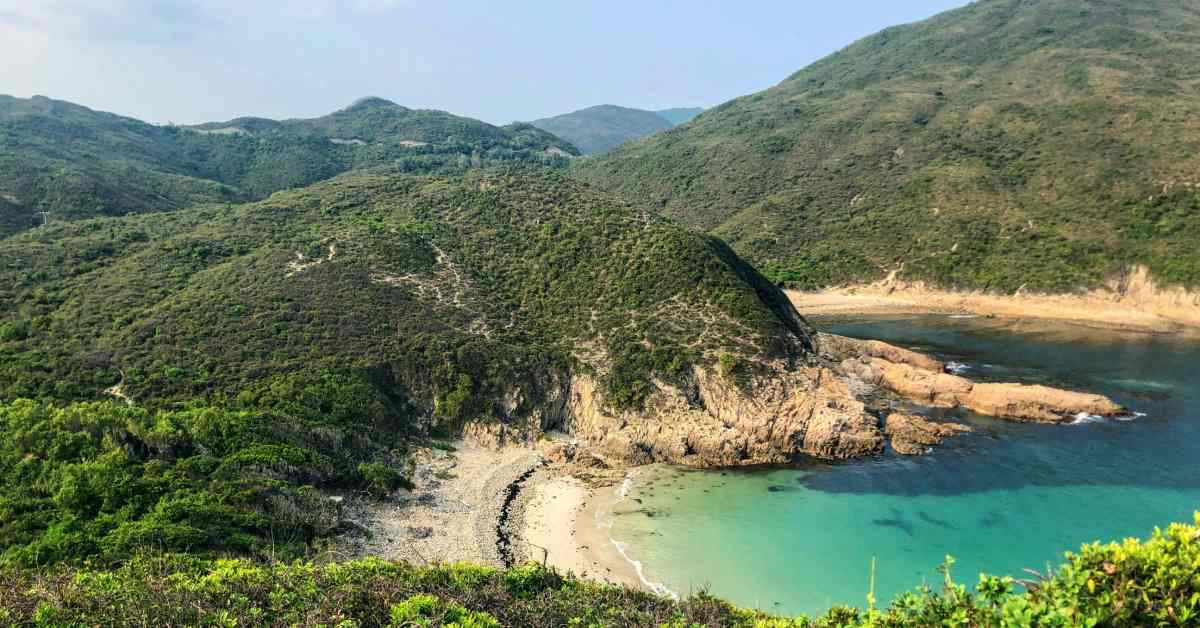
The first thing that catches you off guard is the colour of the water. Along parts of Hong Kong’s eastern coastline, the sea shifts from bright turquoise near the shore to deep sapphire further out, looking more like something you’d expect in the Caribbean than a bustling financial hub.
Yet this is still Hong Kong.
Just under an hour from the glass towers of Central, the landscape changes completely. High-rise buildings give way to forested hills, fishing villages and quiet bays where the loudest sound is often the waves meeting the shore.
It’s a side of the city that many first-time visitors never see—and one that even surprises plenty of locals.
Sai Kung: Hong Kong’s Unexpected Tropical Paradise
Much of this hidden coastline lies in Sai Kung, often referred to as Hong Kong’s “back garden.”
Instead of shopping malls and office blocks, you’ll find hiking trails winding through green hills, seafood restaurants overlooking the waterfront and boats bobbing gently in sheltered harbours. The pace slows almost immediately, making it hard to believe you’re still in one of the world’s most dynamic cities.
Sai Kung is also home to part of the UNESCO Global Geopark, where millions of years of volcanic activity have shaped towering rock columns, dramatic cliffs and one of Hong Kong’s most spectacular stretches of coastline.
Hap Mun Bay Is Almost Too Beautiful to Believe
One of Sai Kung’s biggest highlights is Hap Mun Bay, better known as Half Moon Bay.
Only a short boat ride from Sai Kung Pier, the crescent-shaped beach regularly appears on lists of Hong Kong’s best beaches—and it’s easy to see why.
The water is astonishingly clear.
On calm days, you can see straight through to the seabed, while the fine white sand gives the bay a distinctly tropical feel. Hong Kong’s Environmental Protection Department consistently ranks Hap Mun Bay among the territory’s cleanest bathing beaches, helping cement its reputation as one of the best places to swim in the city.
Standing on the shoreline, it’s difficult to shake the feeling that you’ve somehow wandered onto a Caribbean island.
Clear Water Bay Lives Up to Its Name
A little further south, Clear Water Bay Second Beach completely exceeds all expectations.
Framed by lush green hills, its calm, transparent water and soft golden sand create a scene that feels worlds away from Hong Kong’s famous skyline. On bright summer days, the sea glows in vivid shades of turquoise that seem almost unreal.
If someone showed you a photograph without saying where it was taken, Hong Kong probably wouldn’t be your first guess.
Tai Long Wan Rewards Those Who Make the Journey
For travellers willing to put in a little more effort, Tai Long Wan offers some of Hong Kong’s most breathtaking coastal scenery.
Rather than one beach, it’s a collection of four spectacular white-sand bays separated by rugged headlands on the eastern Sai Kung Peninsula.
Getting there isn’t quite as simple. Most visitors hike part of the famous MacLehose Trail or arrive by boat, and that’s part of the appeal. The extra effort keeps the coastline feeling wonderfully unspoilt, even during the warmer months.
Rolling green mountains tumble towards bright blue water, while secluded beaches stretch for hundreds of metres with barely a building in sight. It’s the sort of landscape that completely changes your perception of Hong Kong.
Why So Few People Know About Hong Kong’s Beaches
The biggest surprise isn’t that these beaches exist.
It’s that so many people have no idea they’re there.
Hong Kong is made up of more than 260 outlying islands and boasts an extensive coastline, much of which is protected as country parks and marine reserves. Around 40% of the territory’s land has protected status, preserving forests, mountains, beaches and hiking trails that remain largely untouched by urban development.
That extraordinary contrast is what makes Hong Kong unlike anywhere else.
You can spend the morning wandering beneath some of Asia’s tallest skyscrapers before kayaking across crystal-clear water in the afternoon or hiking to a beach where your only company is seabirds, distant fishing boats and the sound of the waves.
Few cities can offer that kind of day.
The Best Time to Visit Hong Kong’s Beaches
If you’re hoping to enjoy these beaches at their most peaceful, it’s worth avoiding weekends and public holidays, when popular spots attract more visitors.
During the warmer months, the sea is generally at its clearest, while spring and autumn offer comfortable temperatures for hiking and exploring the surrounding coastline. Many of the quieter beaches are only accessible by boat or on foot, helping preserve the tranquil atmosphere that makes them feel so special.
Hong Kong’s Best-Kept Secret
Hong Kong will always be famous for its skyline.
But its greatest surprise may lie far beyond the glass towers.
Hidden among forested peninsulas and scattered islands is a coastline that challenges almost everything people think they know about the city. White-sand beaches, turquoise bays and dramatic coastal scenery aren’t found on some distant tropical island—they’re part of Hong Kong itself.
For travellers prepared to venture beyond the postcards, Hong Kong reveals a softer, slower and altogether more unexpected side. It’s the kind of place that leaves you checking the map more than once, simply because it doesn’t look anything like the Hong Kong you thought you knew.
About the Author